
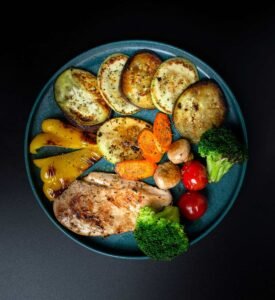
You’re Eating “Clean” But Still Bloated Every Day?
Here’s what no one tells you: that kale salad, grilled chicken, and sweet potato you had for lunch? Your gut might be struggling to process it — not because the food is “bad,” but because of how you combined it.
I spent years eating the “right” foods while dealing with constant bloating, afternoon crashes, and that heavy, uncomfortable feeling after every meal. My doctor ran tests. Everything came back “normal.”
Then I discovered something that changed everything: food combining.
And no, this isn’t about restrictive diets or eliminating entire food groups. It’s about understanding how your digestive system actually works — and working with it, not against it.
What Is Food Combining (And Why Your Gut Cares)
Your digestive system is like an assembly line. Each “station” needs specific conditions to do its job:
Proteins need an acidic environment and take 3-4 hours to digest
Starches require alkaline conditions and are digested in about 2 hours
Fruits pass through in 30-60 minutes (when eaten alone)
Fats slow everything down, but are essential for nutrient absorption
When you eat foods that require conflicting digestive environments at the same time, your gut gets confused. Digestion slows. Food sits longer than it should. And that’s when the trouble starts:
→ Fermentation
→ Gas production
→ Bloating and pressure
→ That “food baby” feeling
→ Sluggish energy after meals
The science behind this goes back to how your body produces digestive enzymes. When you overload your system with incompatible combinations, enzyme production can’t keep up — and undigested food becomes fuel for the wrong kind of gut bacteria.
The 3 WORST Food Combinations (That You’re Probably Eating)
 1. Protein + Heavy Starchy Carbs
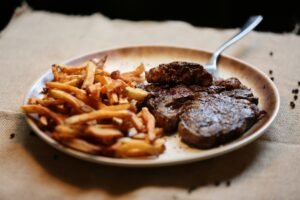
The classic combo: Steak and potatoes. Chicken and rice. Burger and fries.
Why it backfires:
Proteins need strong stomach acid and slow digestion (3-4 hours). Starchy carbs need an alkaline environment and move faster (2 hours). When you eat them together, your body can’t create the ideal conditions for either, so both sit in your stomach longer, fermenting and causing that heavy, bloated feeling.
What happens:
The starches start fermenting before the protein finishes digesting. This produces gas, bloating, and that “Thanksgiving dinner” sensation even from a normal-sized meal.
Better alternatives:
Protein + non-starchy vegetables (salmon + roasted broccoli)
Protein + leafy greens (chicken + mixed salad)
Grilled fish + sautéed spinach with garlic
2. Fruit as Dessert (Right After a Full Meal)
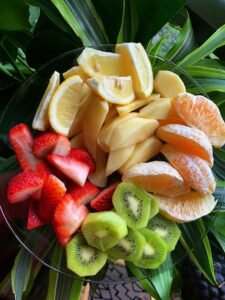
The habit: Finishing lunch with an apple, or having berries after dinner.
Why it’s a problem: Fruit is supposed to be digested quickly — in 30-60 minutes. But when you eat it on top of a slower-digesting meal(protein, fats, complex carbs), it gets trapped. While the fruit waits for everything else to digest, it ferments in your stomach.
What happens: That fermentation creates gas, bloating, and discomfort. You might also notice feeling overly full or experiencing reflux.
The fix: Eat fruit 30 minutes before meals (on an empty stomach)
Or wait
2-3 hours after meals
If you must have fruit with food, pair it with other fruits or leafy greens in a smoothie
3. Dairy + Acidic Foods
Common combos: Yogurt with berries. Milk with orange juice. Cream-based sauces with tomatoes.
Why it causes issues:
Dairy requires a specific digestive process. When combined with acidic foods (citrus, tomatoes, vinegar), it can cause the milk proteins to curdle in your stomach — leading to mucus buildup, bloating, and sluggish digestion.
What happens: Your body struggles to break down the curdled proteins. This is especially problematic if you’re already sensitive to dairy or have any level of lactose intolerance.
Smarter approach:
– If you tolerate dairy, eat it alone or with non-acidic foods
– Try plant-based alternatives when pairing with acidic ingredients
– Minimize dairy if you notice consistent digestive issues
Food Combinations That Actually HELP Your Gut
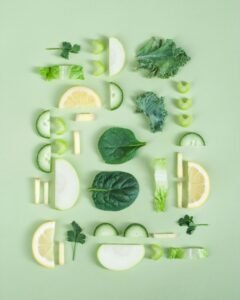
These pairings support smooth, efficient digestion:
✓ Fruits alone
(on an empty stomach in the morning)
Why it works: Nothing slows them down; they digest quickly and provide instant energy
✓ Protein + Non-Starchy Vegetables
Examples: Grilled chicken + zucchini, salmon + asparagus, eggs + sautéed kale
Why it works: Vegetables provide fiber and enzymes that support protein digestion
✓ Starchy Carbs + Vegetables
Examples: Quinoa + roasted Brussels sprouts, sweet potato + green beans
Why it works: Both digested in similar alkaline environments
✓ Healthy Fats + Vegetables
Examples: Avocado salad, olive oil drizzled greens, nuts with raw veggies
Why it works: Fats help absorb fat-soluble vitamins from vegetables
✓ Greens with almost everything
Why it works: Leafy greens are digestive superheroes — they pair well with most foods and support enzyme production
Start Here: One Simple Change This Week
You don’t need to overhaul your entire diet overnight. In fact, that usually backfires.
Instead, try one intentional swap this week:
→ Move your fruit to 30 minutes
before
breakfast instead of after
→ Replace the rice/pasta side with extra roasted vegetables at dinner
→ Skip the yogurt-and-berries combo and have them separately
Pay attention to how you feel 1-2 hours after eating. More energy? Less bloating? That’s your body telling you something.
When Food Combining Isn’t Enough
Here’s the truth: optimizing your food combinations can reduce bloating significantly. But if you’ve tried everything
— food combining, elimination diets, digestive enzymes — and your gut still feels off, there’s likely something deeper going on.
Chronic bloating often signals:
– Microbiome imbalance (too much bad bacteria, not enough good)
– Low stomach acid or enzyme production
– Inflammation in the gut lining
– Food sensitivities you’re not aware of
– Stress impacting your gut-brain axis
This is where targeted gut support can make the difference between “feeling okay” and “feeling good.”
At VitalHerLife, we focus on science-backed, natural solutions that address the root cause — not just mask symptoms. Our community has found relief through gentle gut repair protocols that work with your body’s natural rhythms.
Ready to feel lighter, more energized, and finally trust your gut again?
Explore our complete gut health resource library and join women who’ve transformed their digestive wellness from the inside out.
Discover Natural Gut Support That Works →
Quick Reference: Your Food Combining Cheat Sheet
 COMBINE FREELY:
Proteins + Non-starchy veggies
Starches + Veggies
Fats + Veggies
Leafy greens + Almost anything AVOID COMBINING:
Protein + Heavy starches
Fruit + Full meals
Dairy + Acidic foods TIMING MATTERS:
Fruit: 30 min before meals or 2-3 hours after
Water: Before meals or 30+ min after (not during)
Largest meal: When your digestion is strongest (usually lunch)
About VitalHerLife
We help women reclaim their gut health through education, community, and science-backed natural solutions. Because feeling bloated shouldn’t be your “normal.” Join our newsletter for weekly gut health insights
 Follow us: on [Pinterest](https://pinterest.com/vitalherlife)
 Questions?
hello@vitalherlife.com